
Engineering Intelligence
From Reality
ScanIQ is an AI-powered computational engineering platform that transforms real-world scan data into optimized, manufacturable solutions across industries.
Contact: [email protected]
Proven Where Performance Matters Most
Motocross is our beta proving ground. Extreme conditions. Real riders. Real data. The same closed-loop system powers every other industry vertical.
Motocross Beta
Real-time sensor fusion, suspension optimization, and continuous performance evolution under race conditions.
Aerospace
Structural health monitoring, digital twins, topology optimization, and lightweight lattice structures.
Maritime
Autonomous systems, energy optimization, hull integrity, and predictive maintenance for intelligent vessels.
Platform Core
3D scanning • AI analysis • Biomimetic lattice design • Closed-loop validation • Additive manufacturing ready.
One Platform. Multiple Industries.
Built on advanced computational engineering methods in the same family as tools that have been tried and tested in aerospace propulsion and high-performance additive manufacturing.
Scan & Capture
LiDAR, photogrammetry, and high-resolution sensing to bring physical reality into the digital domain.
Analyze & Model
AI-driven geometry, load, and performance analysis with digital twin generation.
Optimize & Design
Topology optimization and biomimetic lattice structures for strength-to-weight and performance gains.
Validate & Iterate
Closed-loop feedback from real-world testing continuously improves every future design.
Projects & Work
Motocross suspension and exhaust acoustics — measured on real bikes, modelled in PicoGK, optimised in closed loop. Questions about any project: [email protected]
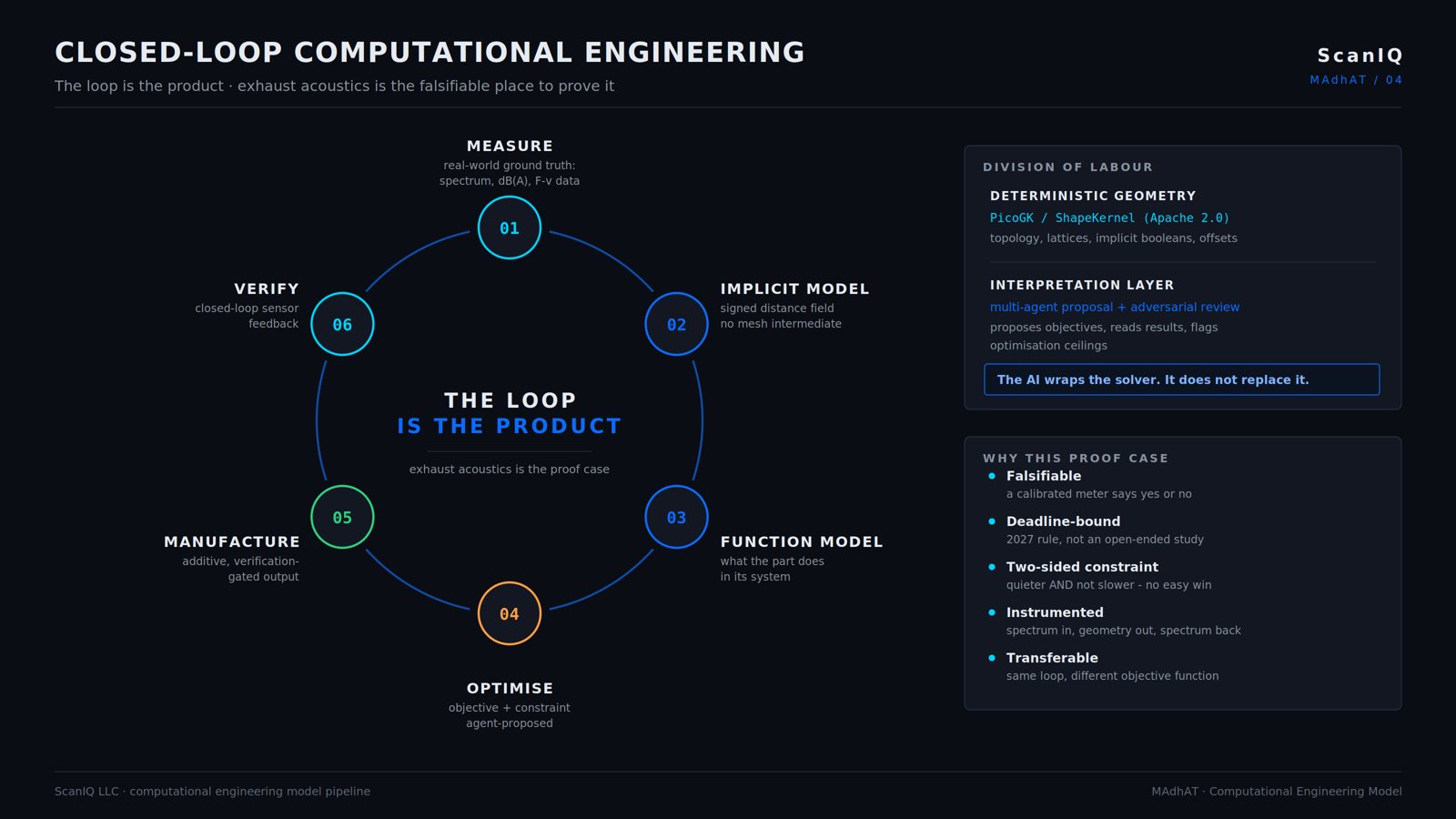
Closed-Loop Computational Engineering
The loop is the product: measure → implicit model → function model → optimise → manufacture → verify.
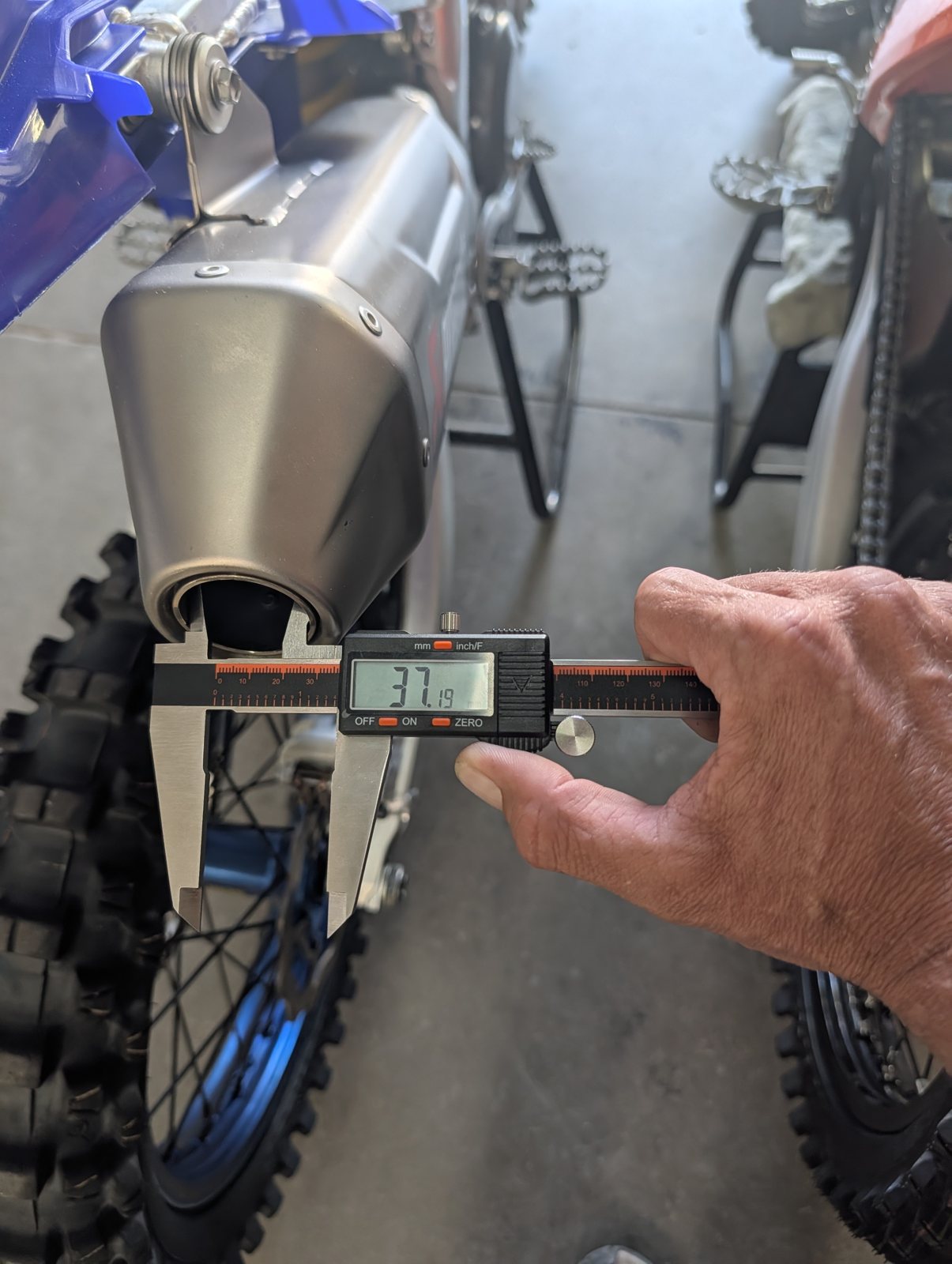
Field Measurement
Every project starts with real dimensions taken on the bike — here, an MX silencer outlet on digital calipers.
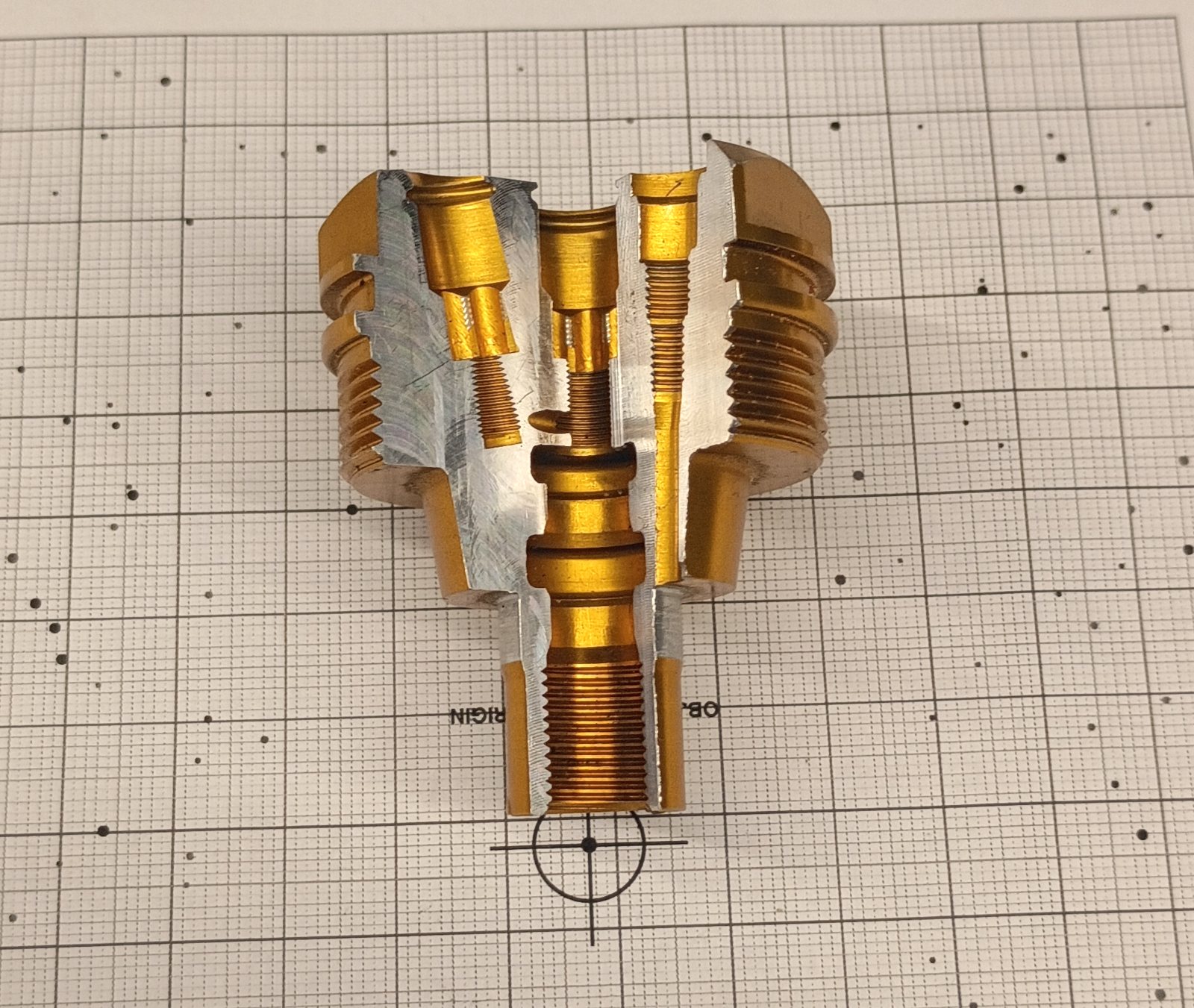
Sectioned Damper Adjuster Body
A production adjuster body cut in half to expose the real drillings, threads and needle seats — the ground truth our flow models are built from.
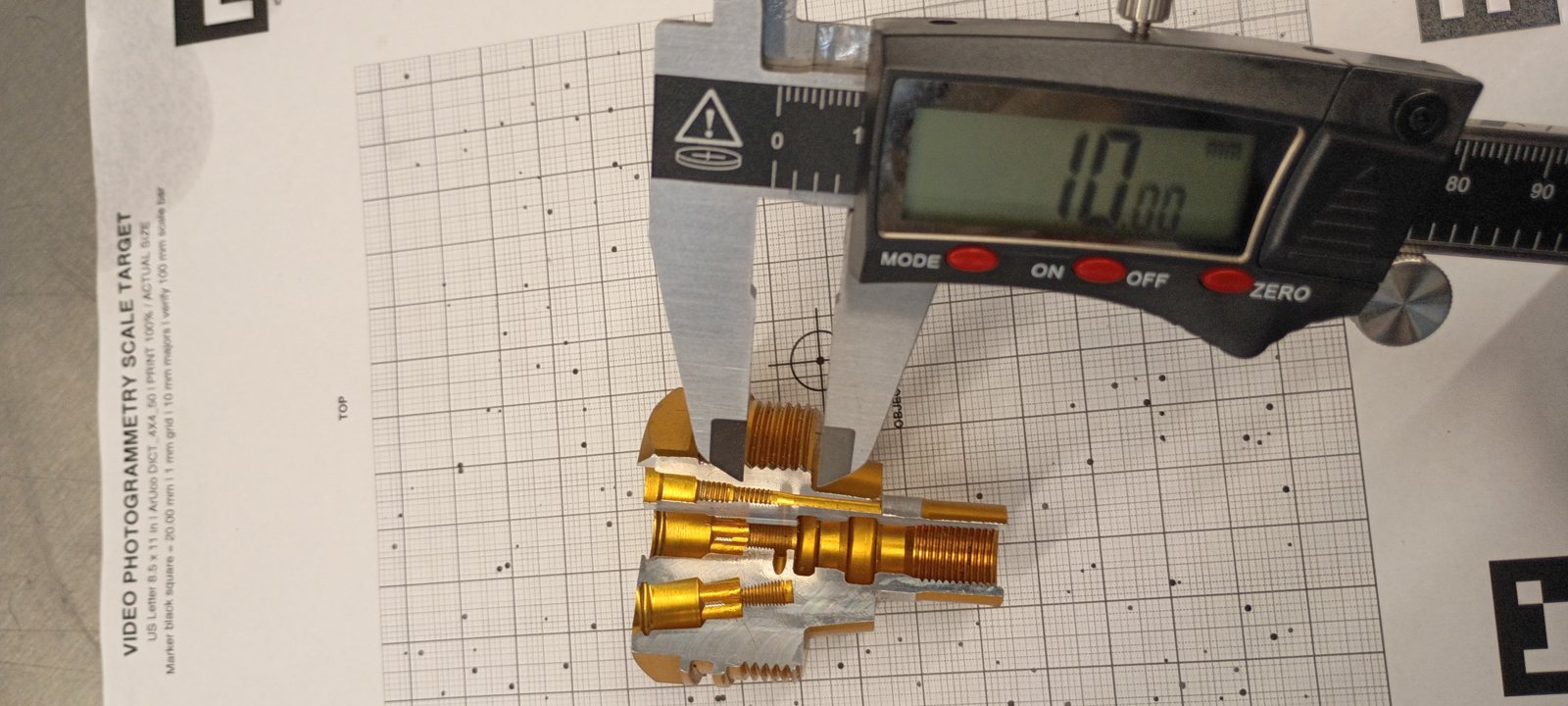
Measuring the Cutaway
Passage and thread dimensions taken on calipers over a printed ArUco photogrammetry scale target, so photos and measurements share one metric frame.
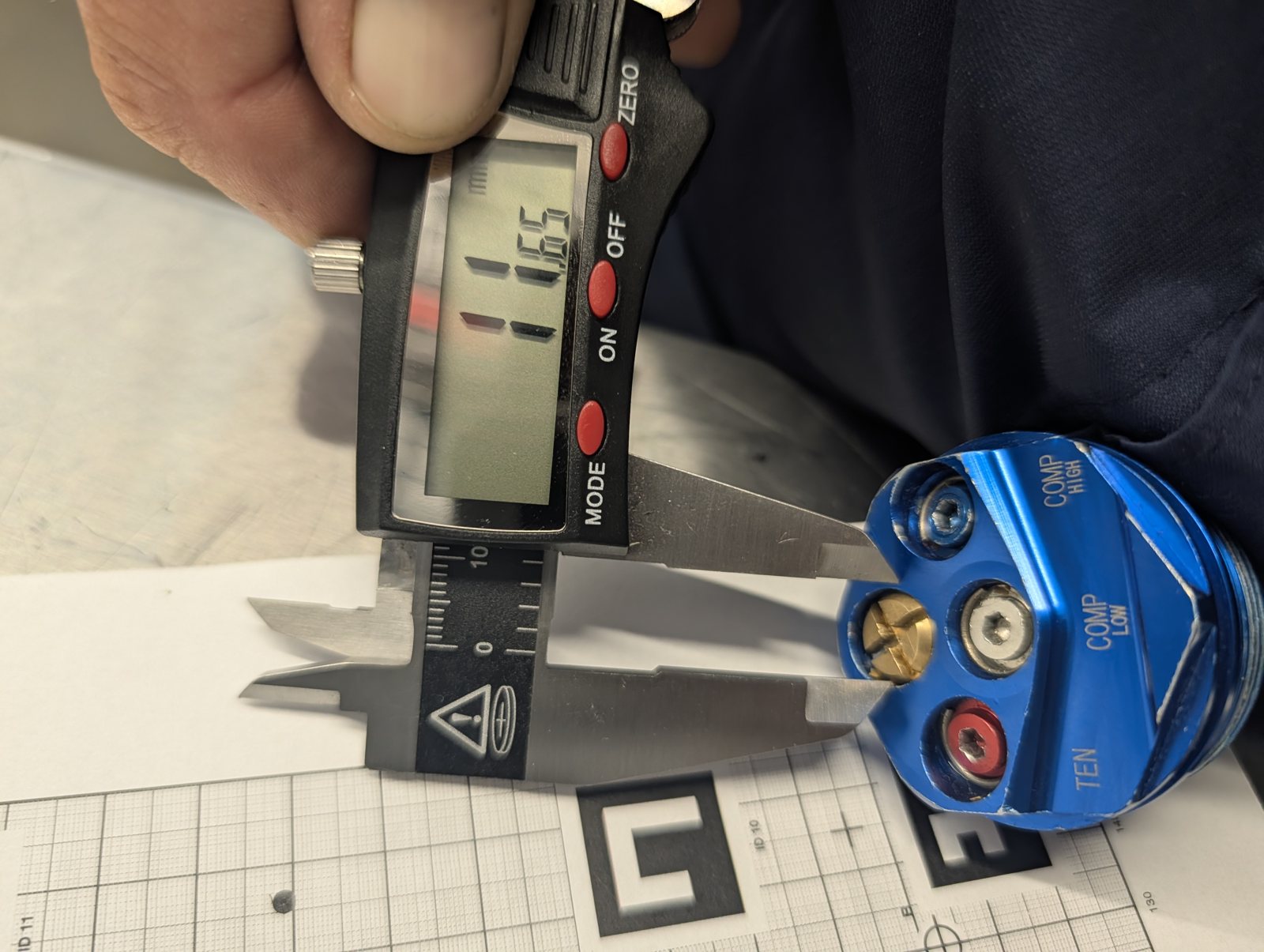
KYB Fork Cap — Adjuster Layout
Measuring adjuster-port spacing (compression high/low, rebound) on a fork cap before modelling it.
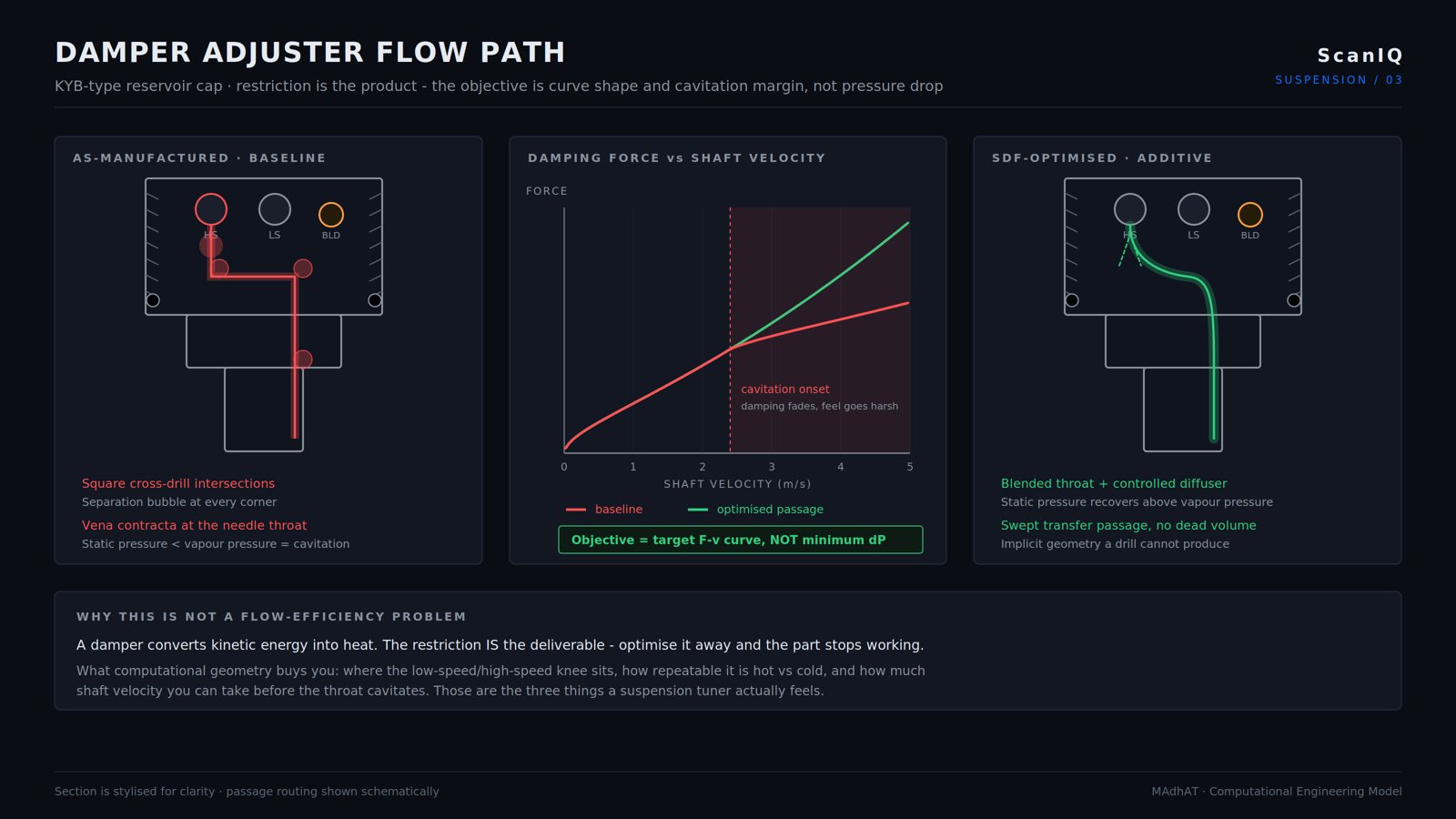
Damper Adjuster Flow Path
Suspension: the objective is the force–velocity curve and cavitation margin, not minimum pressure drop.
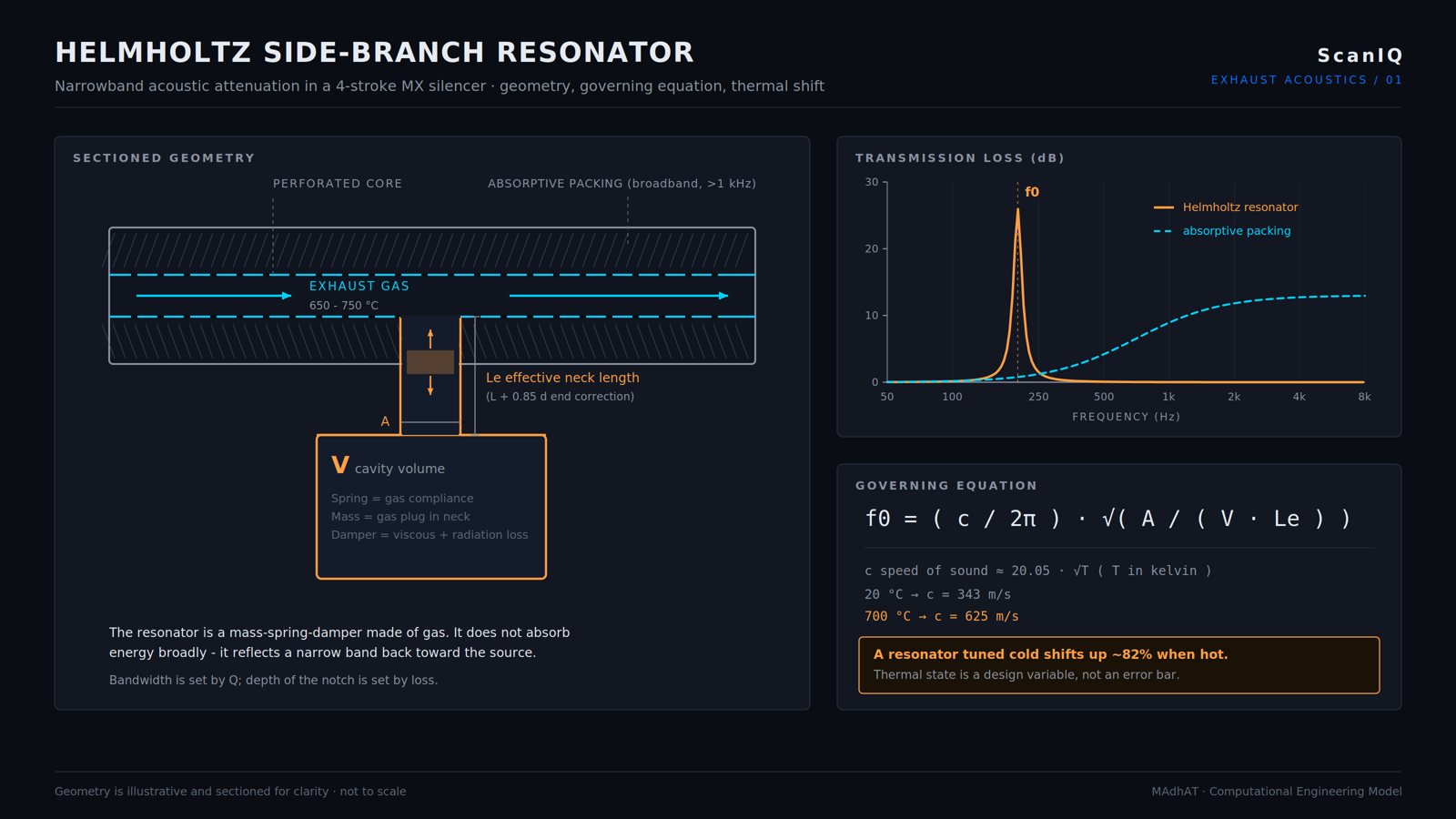
Helmholtz Side-Branch Resonator
Exhaust acoustics: narrowband attenuation, the governing equation, and the ~82% hot-vs-cold frequency shift.
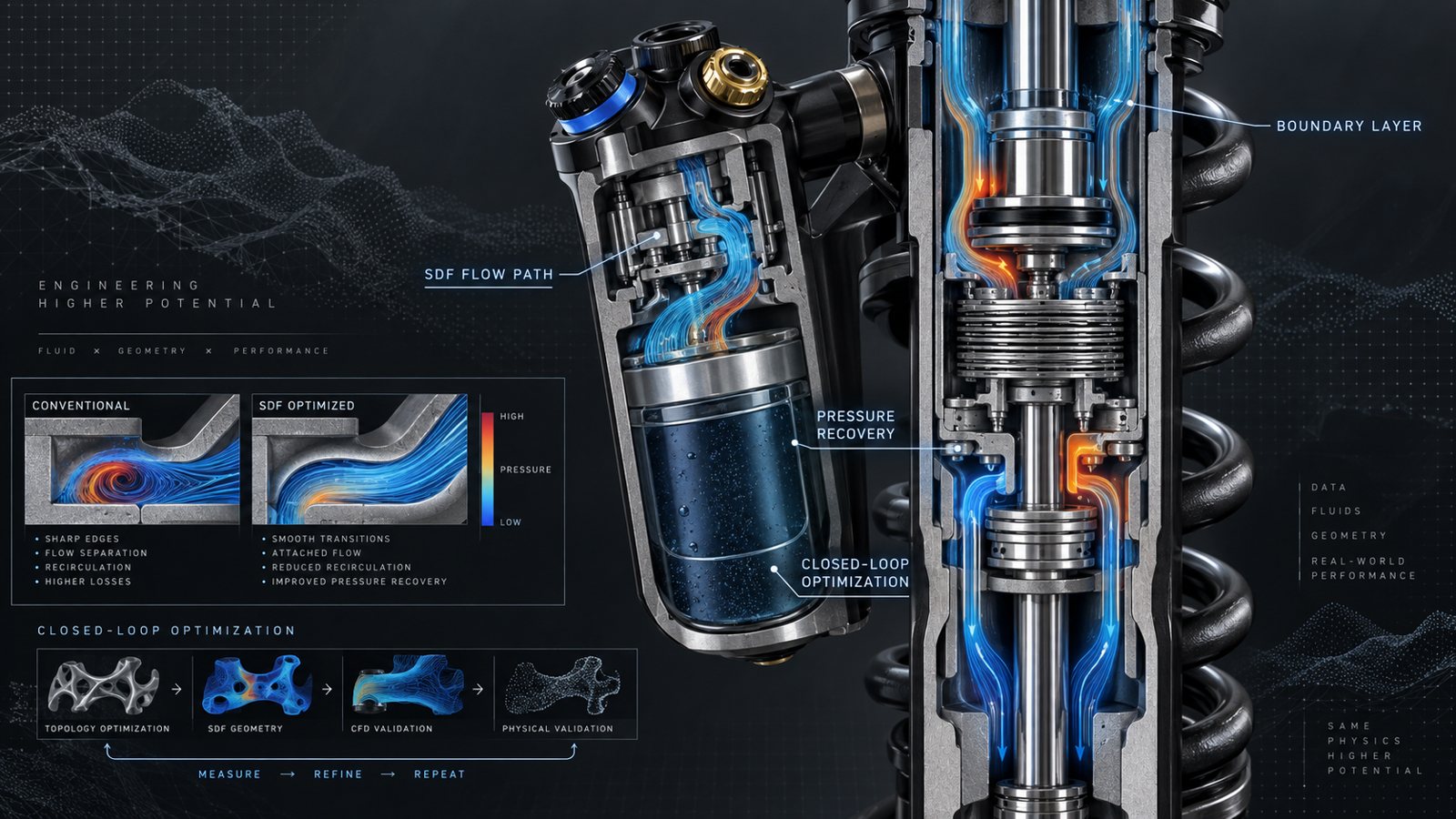
SDF Flow Paths — Rear Shock
Signed-distance-field passage geometry for pressure recovery and reduced recirculation.
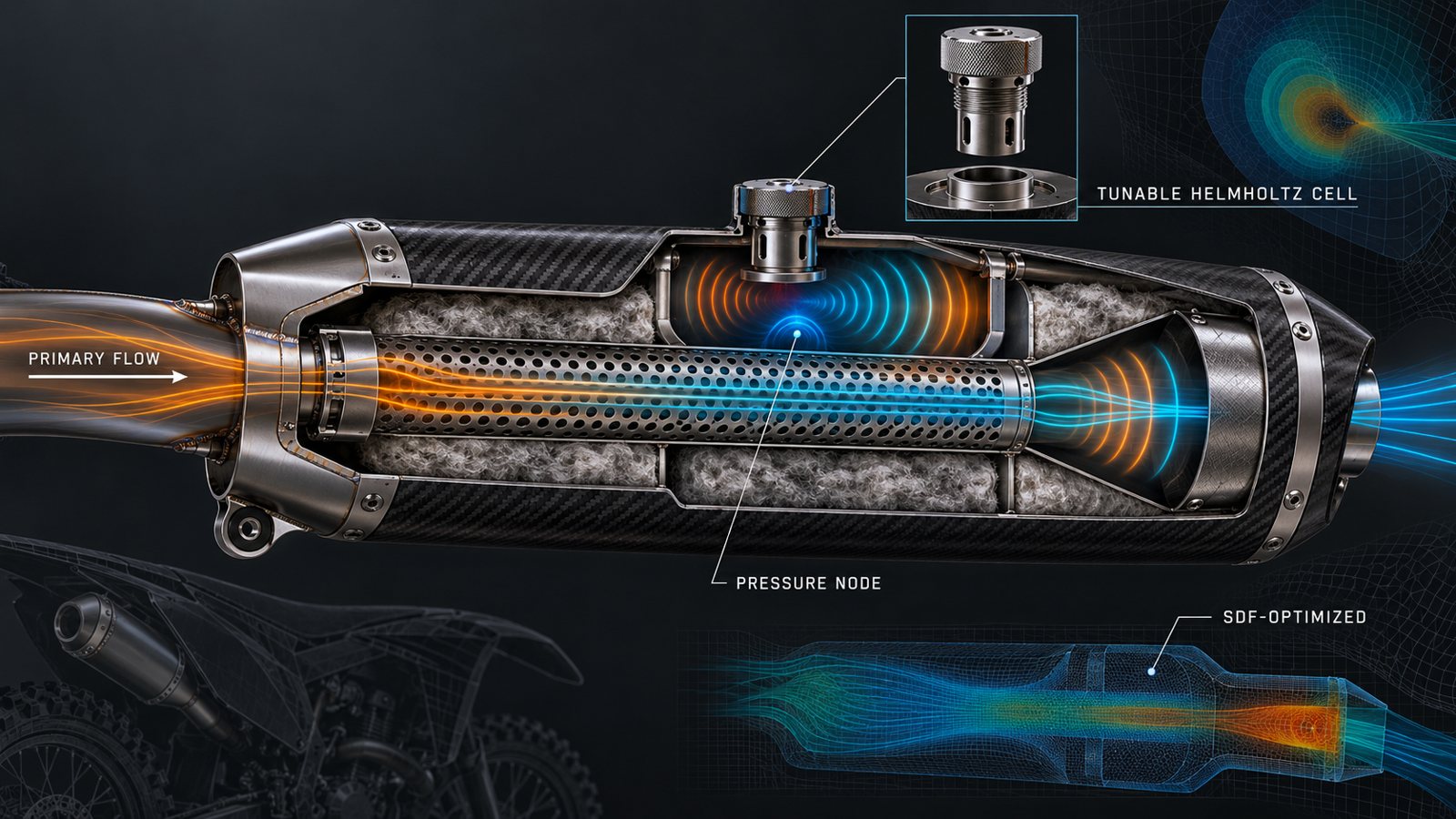
Tunable Helmholtz Cell — MX Silencer
Additive, SDF-optimised silencer with a tunable resonator cell for the 2027 AMA sound rule.
Ready to engage?
Request access for pilots, research collaboration, or investment discussions.
[email protected] Request Access →