ScanIQ · Engineering|AIWarehouse · AI media & digital goods ↗

Live engine

How it works

A traceable scan-to-manufacture pipeline where measurement source, assumptions, solver questions and verification survive all the way to the output.

Live

1 · Capture without pretending the camera is a CMM

Phone photos, video and LiDAR are placed against a printed ArUco photogrammetry mat with a 1 mm grid. Structure-from-motion handles general geometry; silhouette/revolve reconstruction handles turned parts; planform-plus-depth handles thin plates; caliper readings anchor dimensions that must be hard numbers.

[CALIPER][PHOTO][ASSUMED]
Live

2 · Geometry that is editable, not just pretty

PicoGK and signed-distance fields handle lattices, channels and biomimetic negative space. CadQuery, build123d and FreeCAD produce parametric source geometry, STEP and drawings instead of a dead mesh.

Live

3 · The Physics Coach states the pass rule first

Before a solver runs, ScanIQ states the engineering question, the decision it will support and the pass criterion. Available analyses include static FEA, modal/resonance, fatigue, OpenFOAM k-ω SST CFD, 1-D acoustics, electromagnetic field maps and material screening.

Live

4 · Dueling verification

Deterministic rules, two independent AI models and real-world reference values answer the same question. Agreement raises confidence. Disagreement is escalated to a human rather than averaged into false certainty.

Vibe query #1

“Rebuild this fork cap from what I can measure.”

Plain language becomes a measurement plan rather than a hallucinated CAD model.

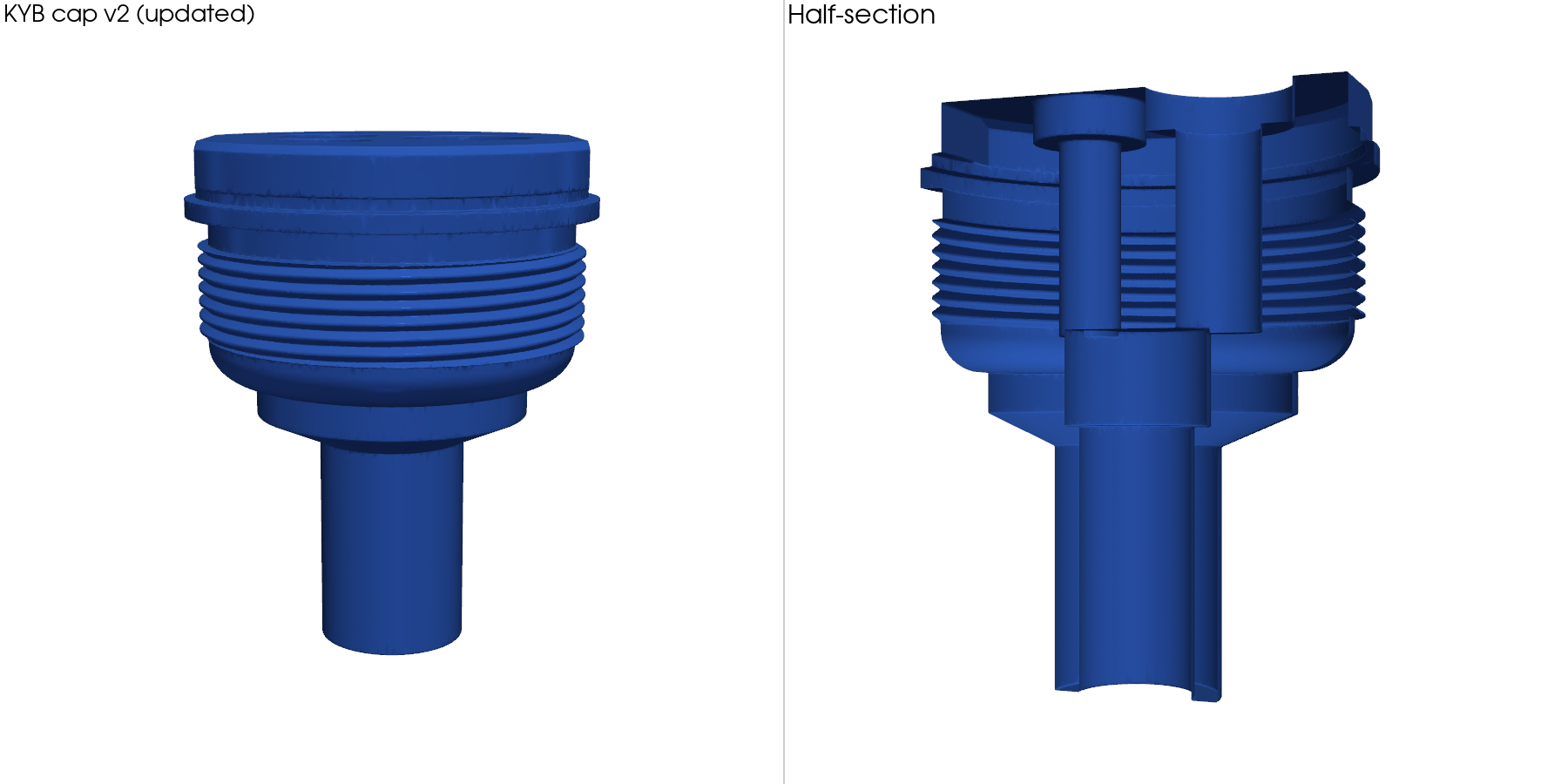
KYB PSF2 fork cap v2 section
KYB PSF2 fork cap v2: rebuilt from caliper readings: Ø41.9 × 1.5 thread, stem OD 16 / ID 11

Pass-rule chain

Scan: capture the cap, section, pitch gauge and calipers. Plan: separate hard dimensions from image-derived shape and unresolved groove depth. Solve: build an editable revolved/parametric model. Verify: re-check Ø41.9 thread crest, 1.5 mm pitch, 55.62 mm overall length and stem OD 16 / ID 11 × 22.8 mm. Make: STEP/STL after assumptions are either measured or explicitly accepted.

[CALIPER] Ø41.9[CALIPER] 1.5 mm pitch[ASSUMED] groove depth
Vibe query #2

“The rocker is gone. Can you rebuild it and tell me if the model is credible?”

The digital twin is reconstructed from photos after the physical part is gone, then the model is interrogated by static and modal physics.

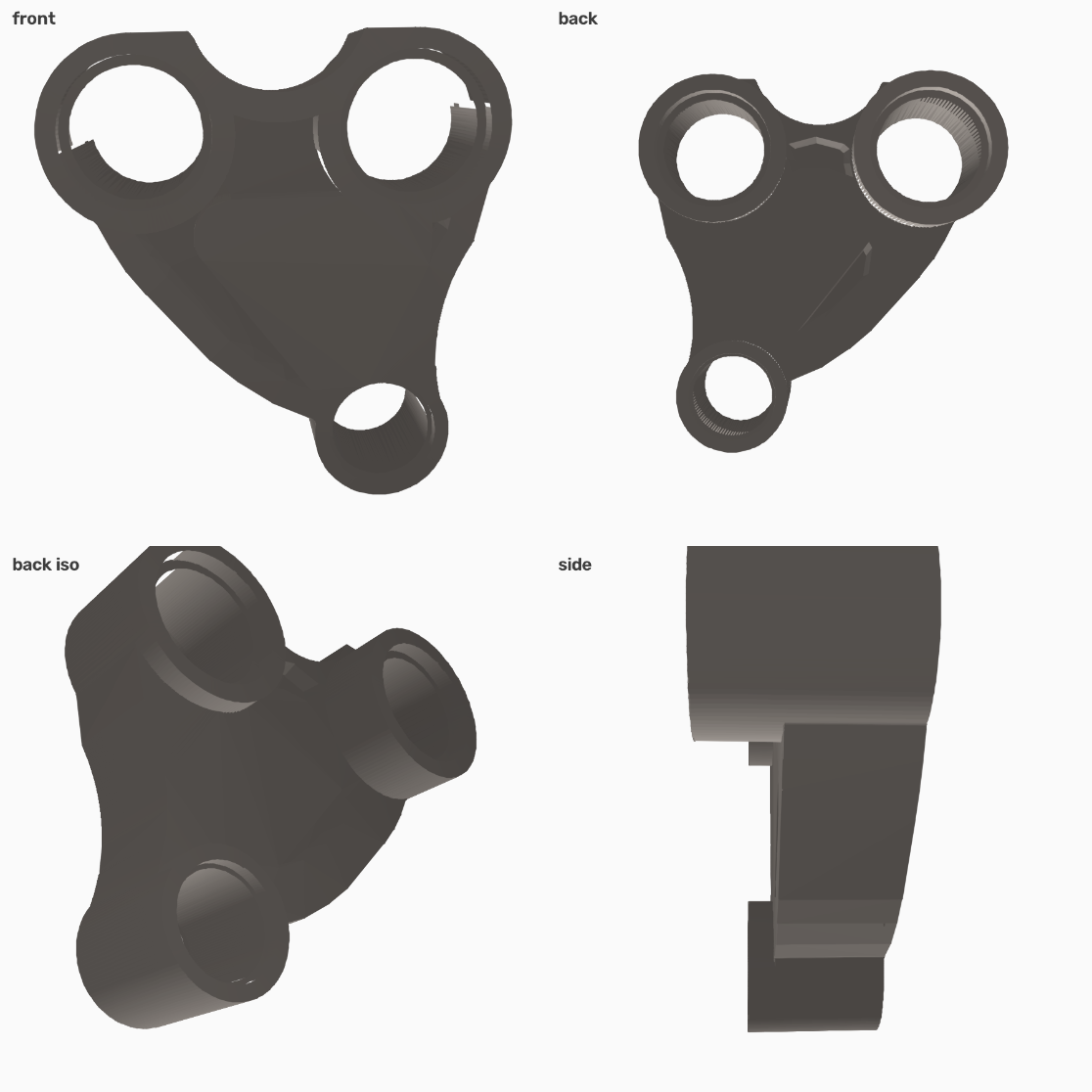
Rocker linkage digital twin
Rocker linkage rebuilt as a digital twin from photos after the part was gone
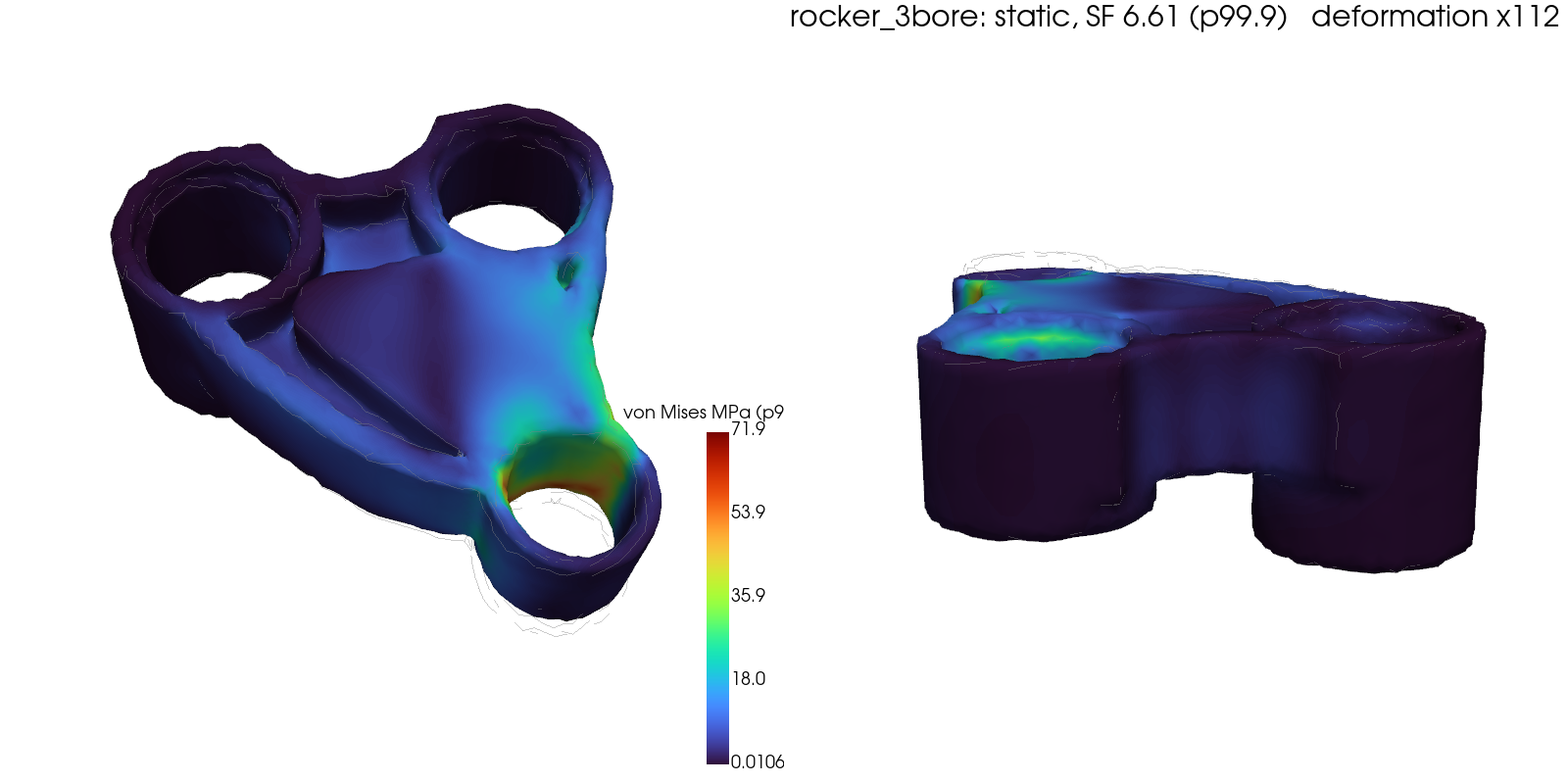
Rocker linkage stress FEA
Rocker linkage static FEA: von Mises stress, safety factor 6.61
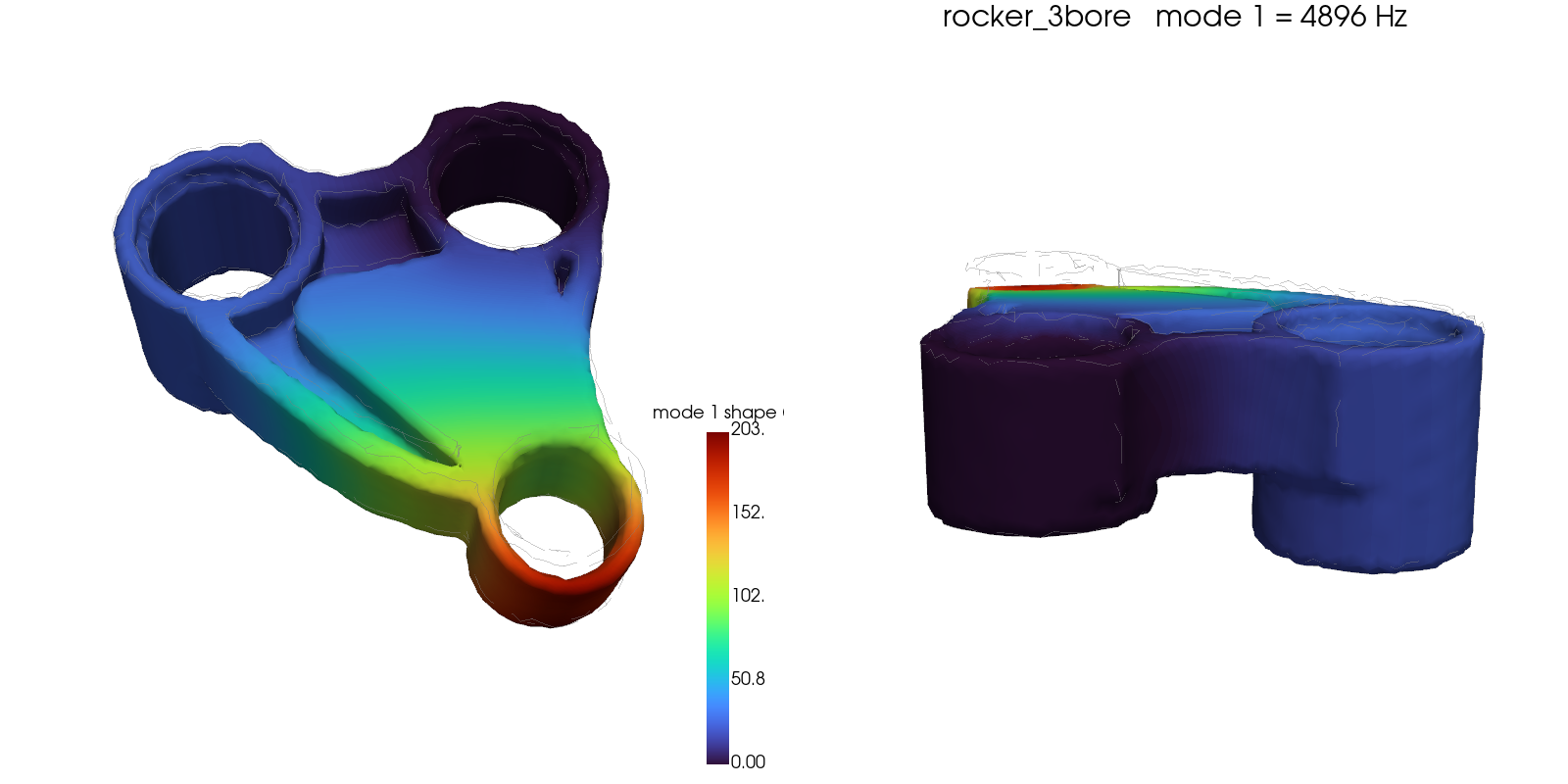
Rocker linkage mode shape
Rocker linkage resonance: mode 1 at 4,896 Hz
Vibe query #3

“Make the thruster more biomimetic — but keep the physics inspectable.”

Implicit geometry is useful only if the engineering loop can still explain what changed and why.

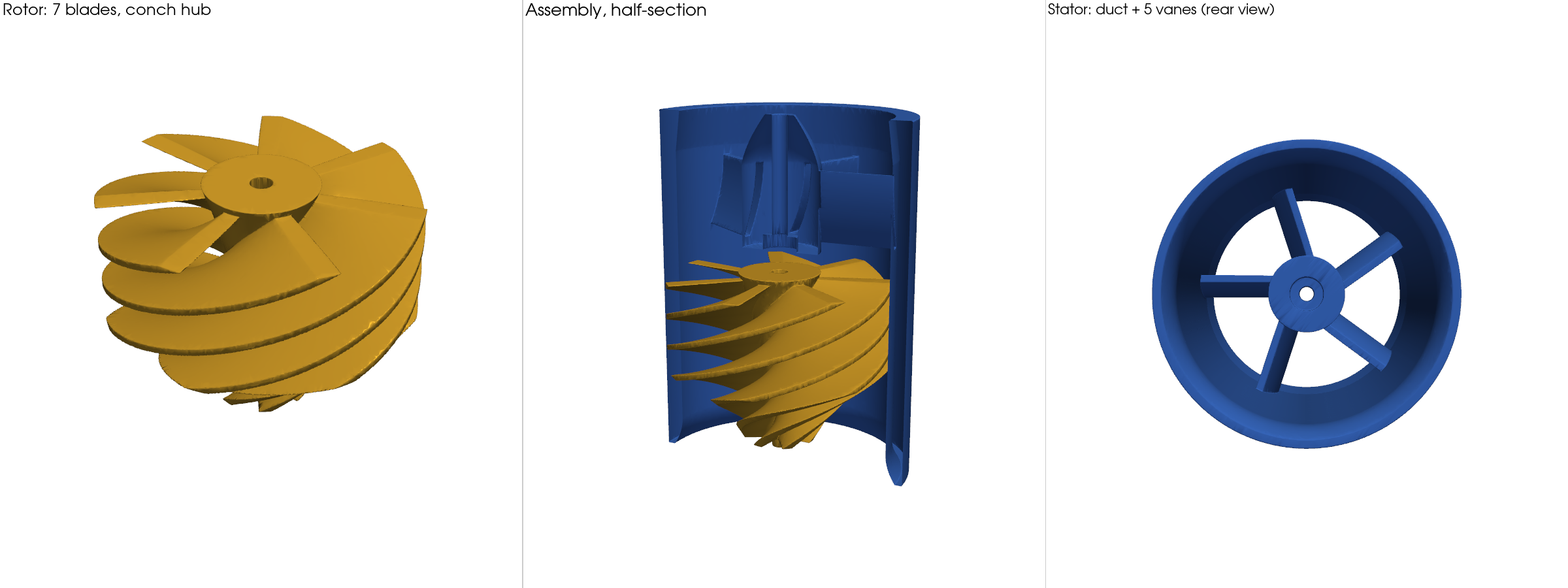
7-blade ducted helical thruster
7-blade ducted helical thruster: conch hub, 17.4° pitch, 5-vane straightener
Pilot

Geometry → field → CFD

The conch/log-spiral hub and helical blades can be generated as signed-distance fields, while blade count, 17.4° tip pitch and the five-vane straightener stay explicit parameters. Electromagnetic field mapping is already part of the toroidal concept; CFD validation for the helical configuration is queued.

Open maritime work