Pilot
Parametric resonance mapping
Sweep geometry, material and boundary conditions through modal analysis; rank which dimension moves which mode away from a known excitation band.

Computational engineering engine
ScanIQ captures the real part, parameterizes it, builds signed-distance geometry, solves FEA, resonance and CFD, optimizes, manufactures, then measures the result and feeds it back. Every dimension stays tagged [CALIPER], [PHOTO] or [ASSUMED], so a model can never hide a guess.
Every ScanIQ job runs the same circuit. Signed-distance geometry (PicoGK) sits at the center so parametric changes, solver fields and manufacturing output all read from one source. The pulse on the ring is the direction of travel; the loop closes when metrology feeds back into the parameters.
Phone photos, a printed 1 mm ArUco mat and caliper readings become a parametric model in CadQuery, build123d or FreeCAD. Provenance travels with every dimension.
Signed-distance fields make lattices, conformal channels, helicoid blades and fluid negative space ordinary operations instead of mesh surgery.
Static FEA, mode shapes, Goodman/Basquin fatigue, OpenFOAM k-ω SST, 1-D exhaust acoustics and EM field maps. The Physics Coach states the question and the pass rule before a solver runs.
Multi-agent proposals ranked against the stated objective and constraints. Agreement raises confidence; disagreement goes to a human, never averaged away.
STEP, STL, drawings and G-code out. Calipers and photos on the finished part close the loop and correct the parameters.
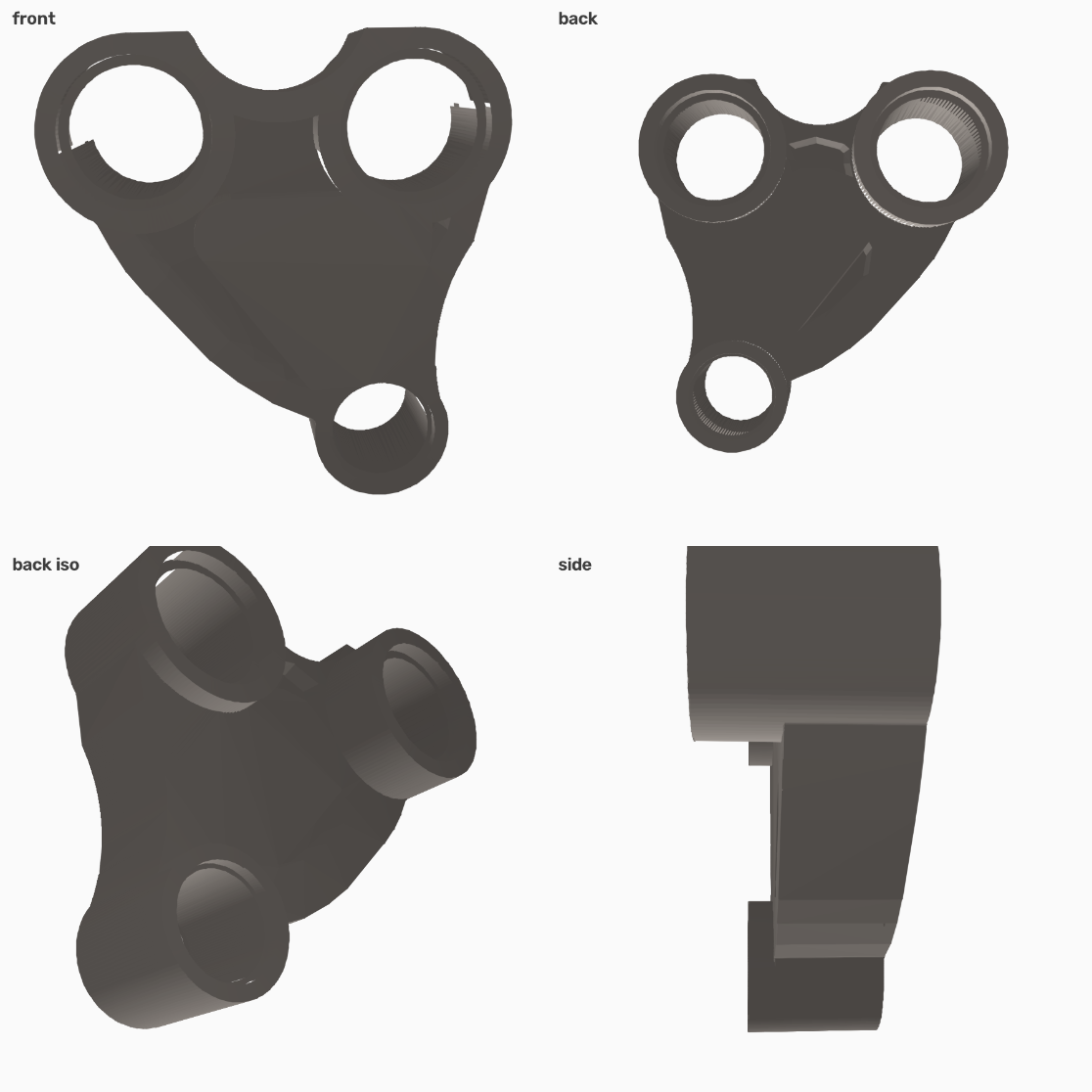
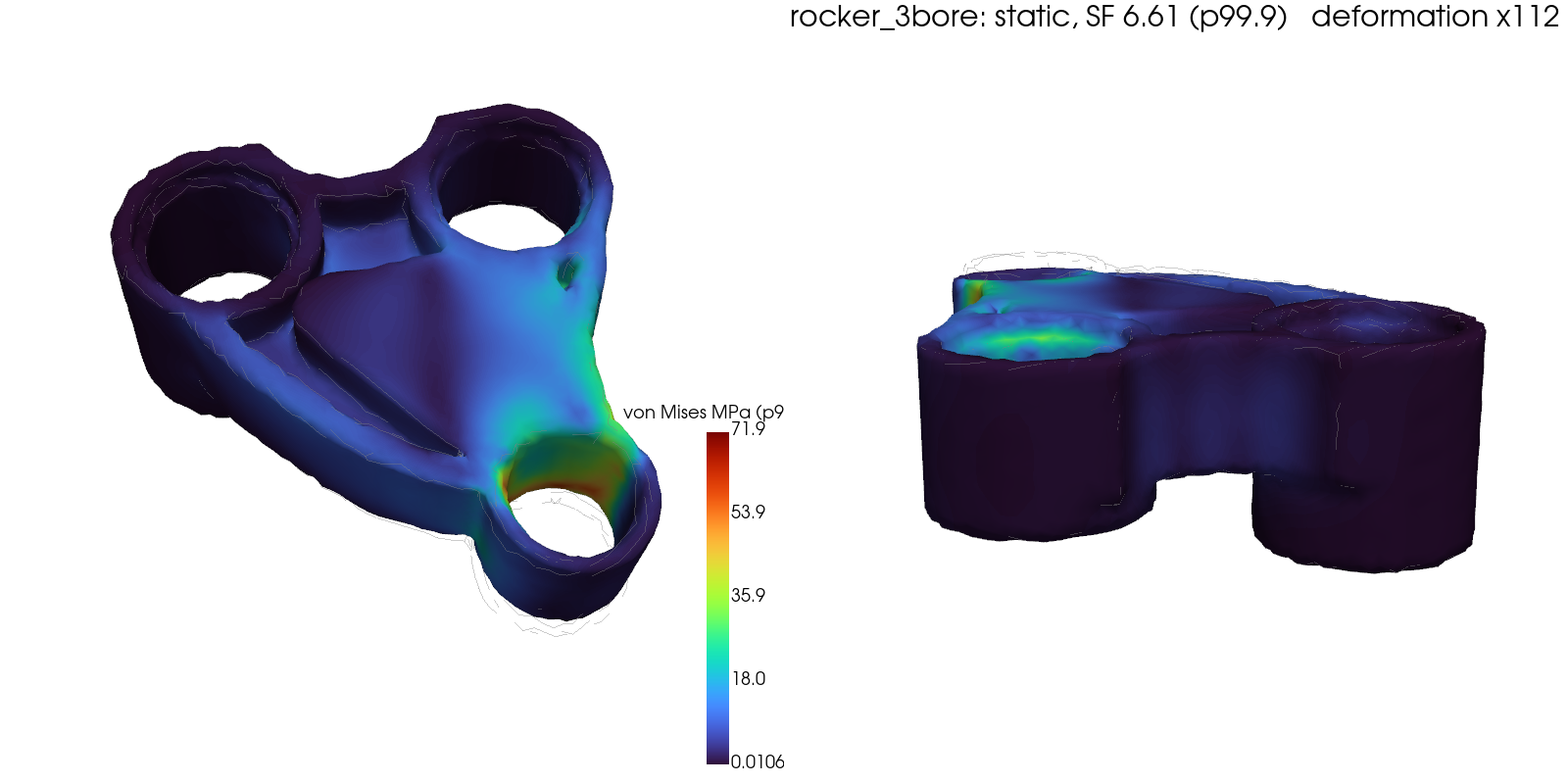
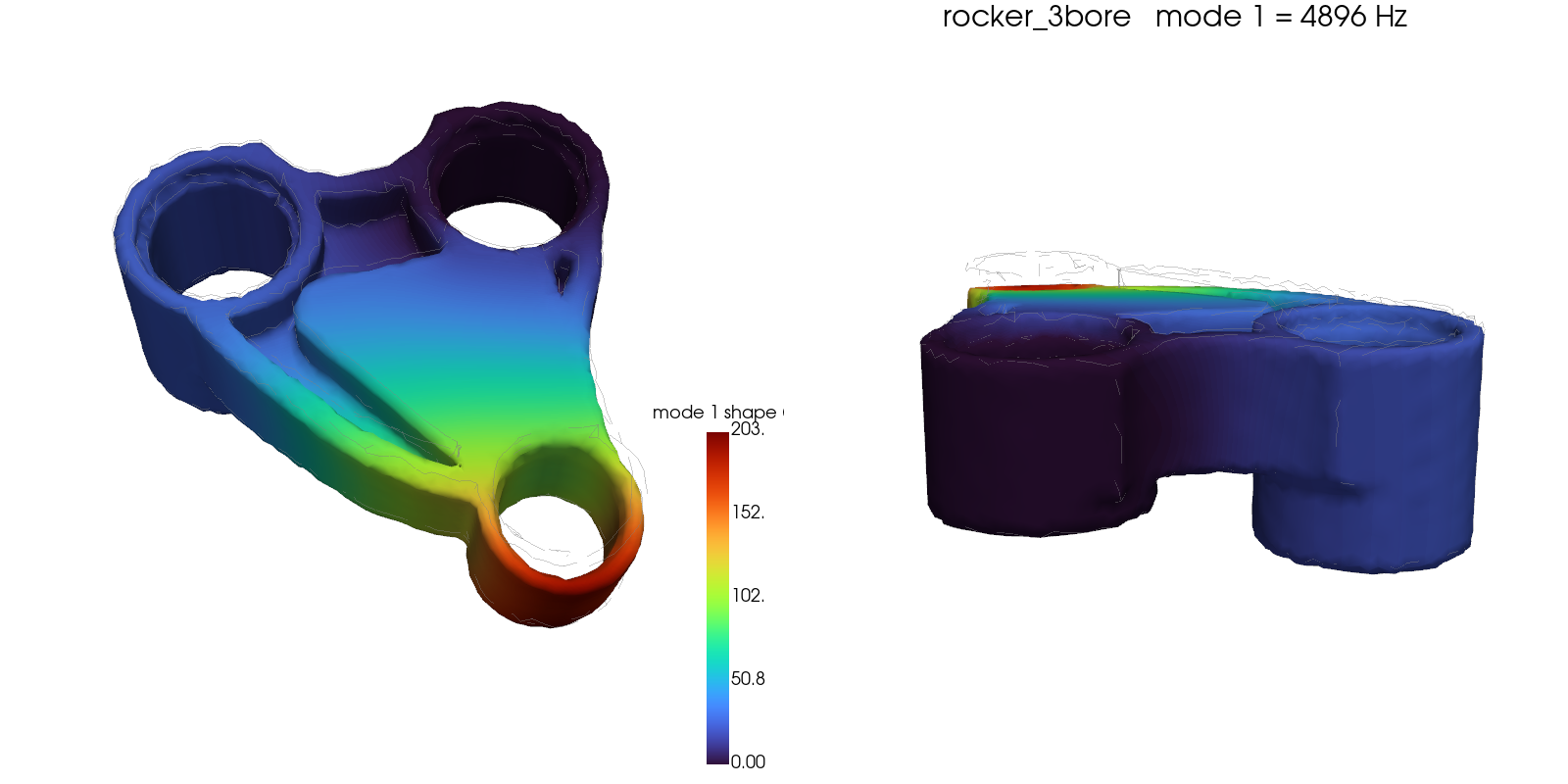
These are the production results, not illustrations. Colour ramps are the solver's own; the numbers under each image are the ones that went into the report.
Far above chassis and engine excitation bands for this part.
Shock body digital twin, same modal workflow. See the mode shape.
The KYB PSF2 fork cap v2 is rebuilt as a parametric revolve. Caliper-locked dimensions cannot drift during optimization. Dimensions nobody has measured yet remain [ASSUMED] and block manufacturing output until resolved.
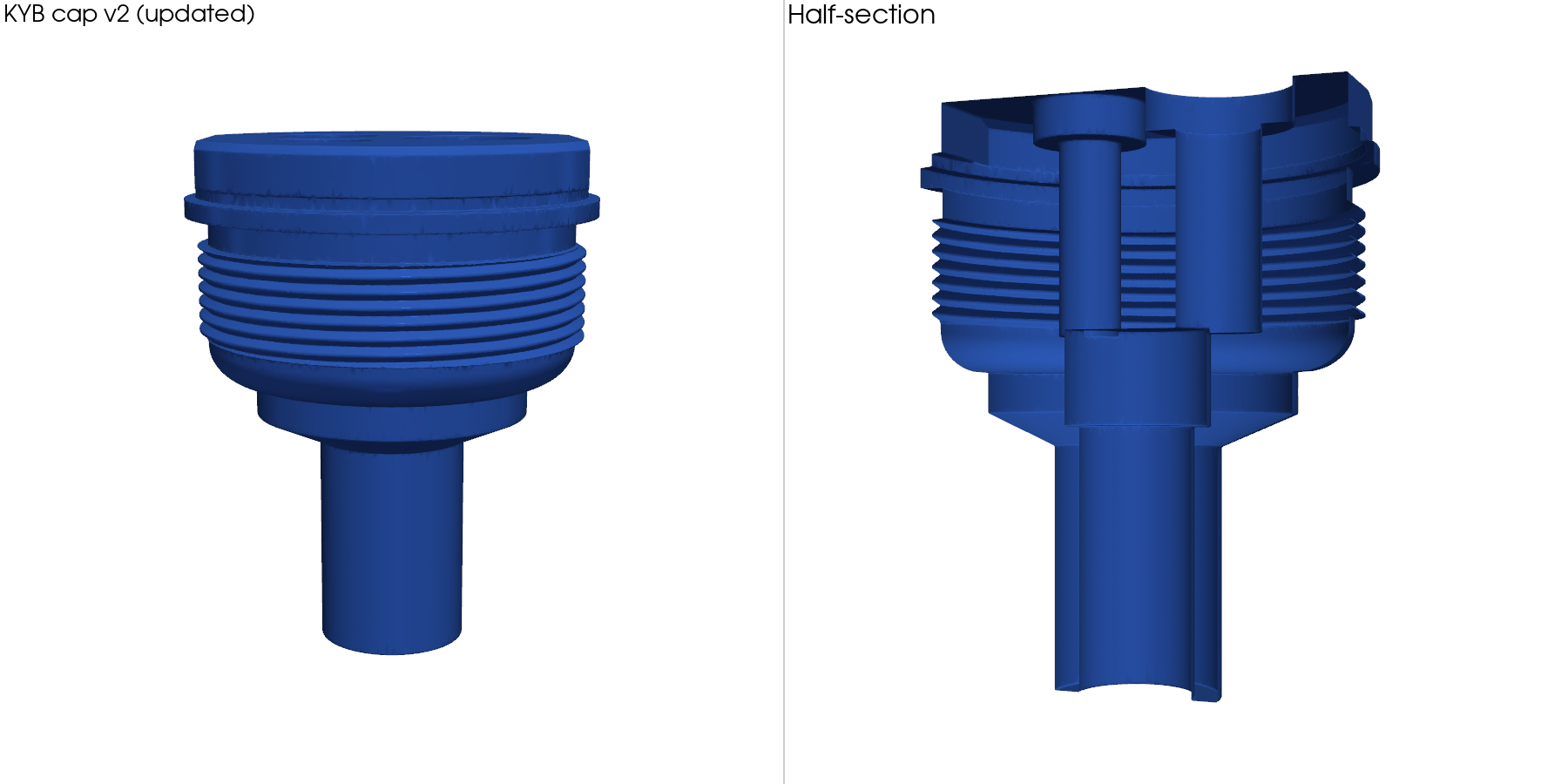
| thread_crest_d | 41.9 mm | locked · caliper |
| thread_pitch | 1.5 mm | locked · caliper |
| overall_length | 55.62 mm | locked · caliper |
| stem_od / stem_id | 16 / 11 mm | locked · caliper |
| groove_depth | ? | assumed · blocks export |
| fillet_r | 0.6–1.2 mm | free · optimizer |
Which dimension moves which mode is the Pilot resonance-mapping program. The sensitivity bars below are a schematic of the method, not a completed sweep.
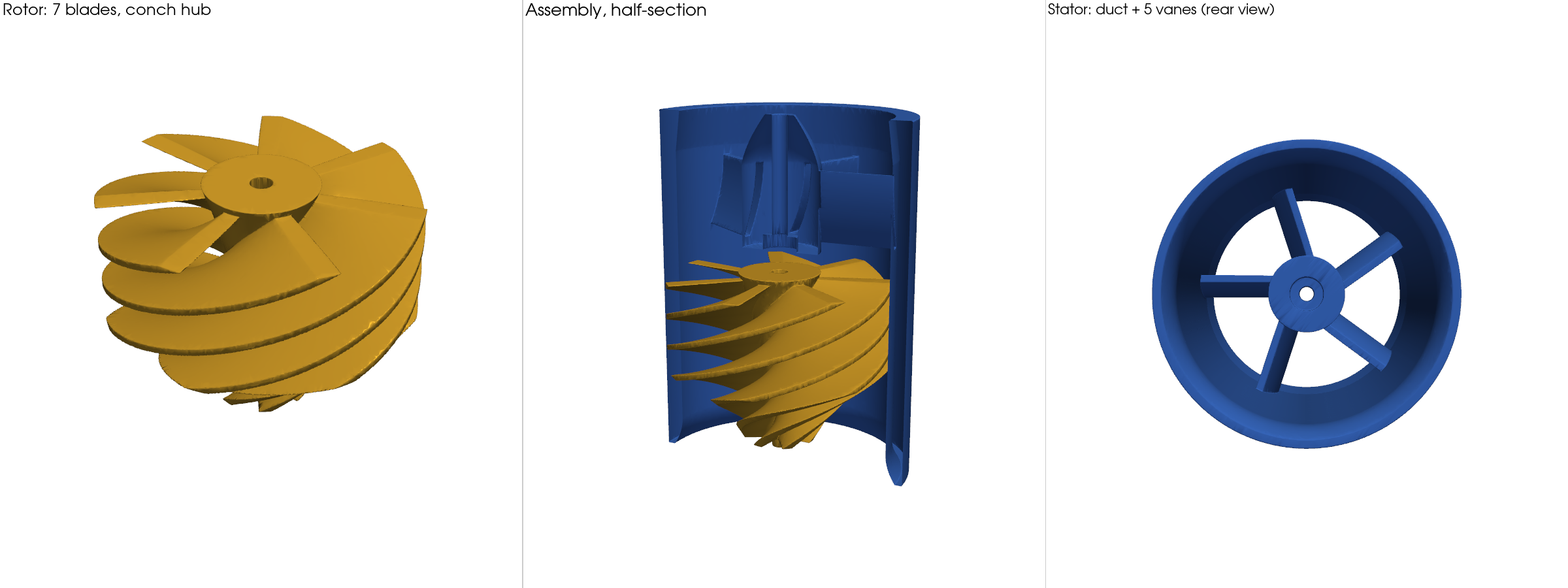
The seven-blade helical thruster has a computed electromagnetic field map today. Its OpenFOAM run is queued, so the streamlines over the duct are a visualization of the question, not a result.

The brake guard went from phone photos to a metric STL to a printed part. The printed part is then measured and the deviation returns to the parameters. The heat-map step is where the loop closes.

Each program says what exists now. Magnetometry is software research on simulation and public data; no magnetometer hardware is owned. Biomagnetic work is research, not a medical device.
Sweep geometry, material and boundary conditions through modal analysis; rank which dimension moves which mode away from a known excitation band.
A submersible localizes against the seafloor's magnetic anomaly map without GPS or beacons. ScanIQ's role is forward modelling, discrimination and provenance.
Rented GPU pods decode and augment phone photo and video streams so reconstruction never waits on the CPU.
Separate fetal cardiac magnetic signals from maternal and environmental components, then map candidate sources in 3-D. No diagnostic or clinical claims.
The physics changes by industry; the operating principle does not: capture the real object, preserve source provenance, solve the question that matters, and keep the uncertainty visible.
Fork caps, rocker linkages, shock bodies and exhaust sound decision support.
Ducted thrusters, AUV geometry and magnetic-anomaly navigation research.
Reverse-engineered brackets, propulsion concepts and lattice mass removal.
Photo-to-spare workflows and GPS-denied navigation research.
Orthotic/prosthetic geometry plus fetal biomagnetic signal research.
Rebuild obsolete parts from photos, calipers and surviving interfaces.
Wear parts, brackets and machine telemetry interfaces.
Conformal heat-exchanger channels and vibration studies for rotating equipment.
Equipment spares and magnetic-field simulation for survey research.
Bracket and bogie resonance screening and replacement-part reconstruction.
Custom grippers and lightweight arms optimized around the actual workspace.
Battery enclosures, motor mounts and cooling geometry.
As-built capture toward parametric models and digital fabrication.
Non-contact capture to replica or fit-check artifact.
Resonance-tuned bodies and Helmholtz-style acoustic geometry.
Geometry capture and structural screening for custom sports components.
Non-contact artifact capture and reversible digital replication.
A phone-centered physics lab: capture, reconstruct, solve, inspect.
Reverse engineering, failure-analysis support and inspection-ready models.
Repair parts and custom-fit objects made from the object in hand.